
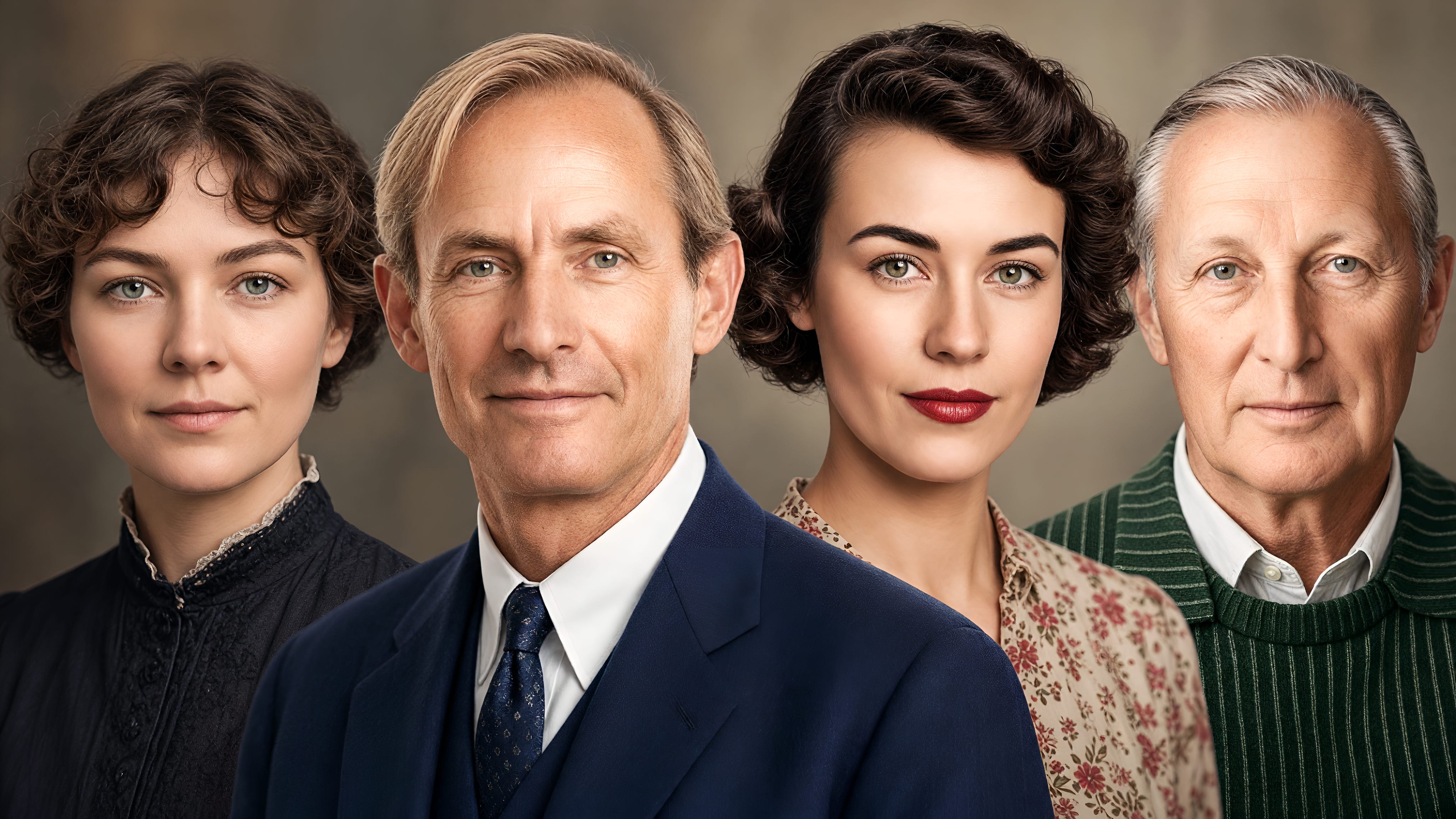
In 2014, Forbes summed up the family in nine words: “175 Years Later, the Mellons Have Never Been Richer.”
Among America’s billion-dollar dynasties, the magazine noted, only the du Ponts have had a longer run.
But the Mellon name has never been hard to find.
It appears on Carnegie Mellon University, on the Mellon Foundation, one of America’s largest supporters of the arts and humanities, and in the legal name of BNY, a banking giant that oversees more than $63 trillion in assets.
What stayed hidden was the scale. Because the money was divided among siblings and cousins and held in a handful of closely controlled companies, no individual Mellon ever looked as rich as a Rockefeller. Yet, by some measures, they were.
Two centuries after it began, that money is still very much alive, and worth more than the remaining Rockefeller fortune.
Forbes ranks the Mellons No. 30 among America’s richest families, with over $17 billion spread across a sprawling clan, and much of it sits in trusts and private holdings that rarely make the news.
The most visible heir, Timothy Mellon, has become what Vanity Fair calls a kingmaker, pouring nine-figure sums into presidential politics.
A distant cousin, Christopher Mellon, once served as a deputy assistant secretary of defense for intelligence, putting a Mellon inside the Pentagon.
And the quietest branch could be the wealthiest of all: Ailsa Mellon Bruce’s grandchildren, the Curriers, drew inheritances from both the Mellons and the Warburg banking family.
For all its heirs, the modern Mellon fortune still bears the fingerprints of one man.
In 1929, as the Wall Street crash that set off the Great Depression wiped out fortunes across the country, the family’s patriarch came out richer, and within five years, a federal grand jury was weighing fraud charges against him.
“The Principal Empire Builder”

The patriarch was Andrew W. Mellon, and panic was never his style.
He was a quiet, careful banker who trusted patience more than nerve, and in the year Wall Street broke, patience won.
While his peers watched their fortunes collapse, his grew by the equivalent of $140 million in today’s money.
He built most of the Mellon empire himself, and he built it to survive bad years. One Mellon later described the family’s major holdings as five “eggs,” and Andrew made sure they never sat in a single basket. Two of them became household names, Alcoa and Gulf Oil, and a third, Mellon National Bank, financed the rest.
He backed each one the way he did everything, slowly and quietly, and he held on for decades.
Pittsburgh made Andrew Mellon rich, and Washington made him powerful. In the capital, he became that rare cabinet officer who seemed bigger than the presidents he served.
Andrew Mellon ran America’s money under three presidents.
He led the U.S. Treasury from 1921 to 1932, under Harding, Coolidge and Hoover, and people liked to say the three presidents served under him. He also helped write the tax rules his own fortune later passed through, and he planned his estate as carefully as any balance sheet.
When he died in 1937, his personal fortune was estimated at about $600 million, roughly $14 billion today, and much of it already belonged to his heirs and his causes.
His two children, Paul and Ailsa, came away with about $250 million each, mostly in stock, or close to $6 billion apiece in today’s money. They inherited his instinct for privacy along with the money.
Twenty years later, the size of that money finally showed. When Fortune published its first ranking of America’s richest people in 1957, four of the top eight places went to Mellons: Paul, Ailsa and their cousins Sarah Mellon Scaife and Richard King Mellon. Fortune put each of them at $400 million to $500 million, roughly $4.8 billion to $6 billion apiece today.
Richard King Mellon, a lieutenant general who chaired Mellon Bank, became the last great leader of the Pittsburgh dynasty. He and his wife, Constance, adopted four children, and he kept the family’s hometown interests under one firm hand.
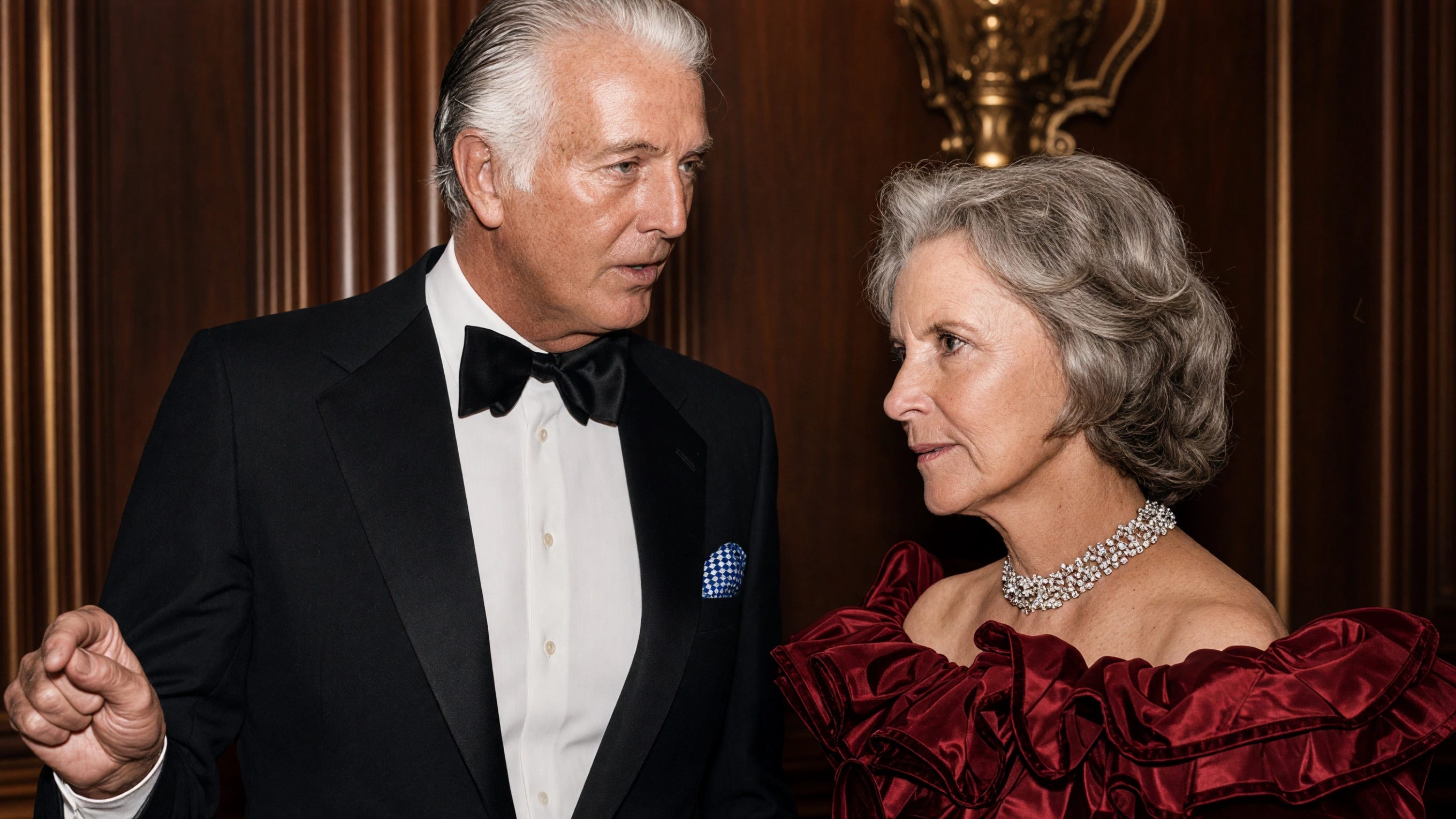
Paul’s second wife, Rachel “Bunny” Lambert Mellon, brought a fortune of her own as a Listerine heiress. With two family fortunes behind her, she made her name as a garden designer and collector, and she lived to 103.
And their money bought a private world. Near Ligonier, Pennsylvania, Richard B. Mellon and his son spent a decade turning a log cabin into Rolling Rock, an 18,000-acre domain for hunting, fishing and riding.
In Upperville, Virginia, Paul and Bunny kept Oak Spring, with her celebrated gardens and his Rokeby Stables. Rokeby bred Mill Reef, rated the eighth-best racehorse in the world in the 20th century, and named him after the club in Antigua where the Mellons owned property.
Bunny Mellon’s blue diamond set a world auction record.
When her collection went to Sotheby’s in 2014, the sales brought in $218 million, more than double the estimate. One of her 13 Rothkos sold for $36.5 million, and her 9.75-carat pear-shaped diamond, graded Fancy Vivid Blue, outsold every blue diamond before it.
The jewels and paintings were only the visible edge of the Mellon fortune, and the fortune itself was far older than any of them.
Yet none of it would exist if a boy born in a whitewashed Irish cottage had obeyed his father and stayed a farmer.
“Wealth and Magnificence”
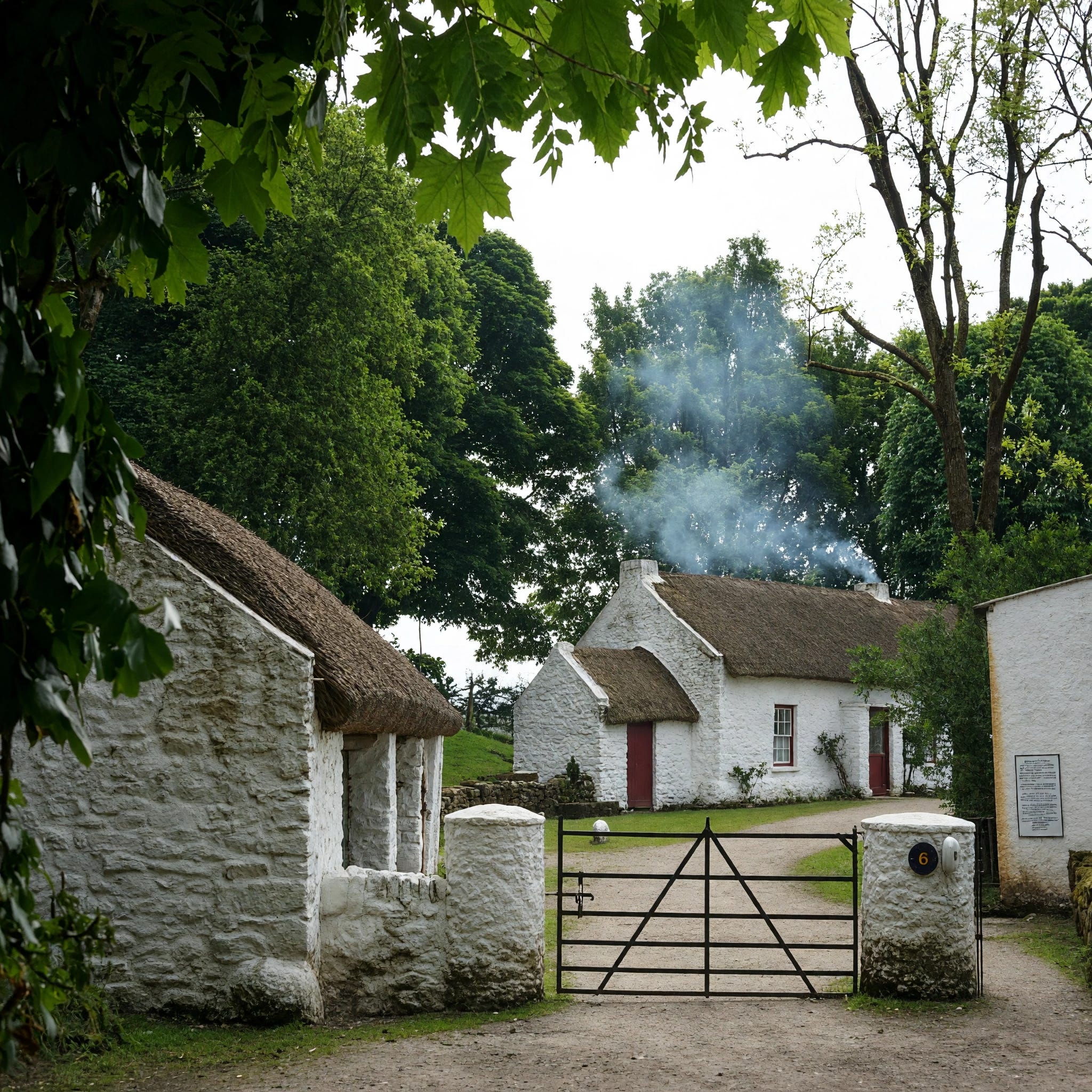
The Mellon story begins in that cottage, a farmhouse near Omagh, in what is now Northern Ireland.
Thomas Mellon was born there on February 3, 1813, the eldest son of a farmer, into a Protestant Ulster Scots family that, like so many of its neighbors, would eventually stake everything on America.
The family made that bet in 1818. Thomas was five when his parents took him on a 17-week journey across the Atlantic, and waiting at the end of it was a log cabin on the Pennsylvania frontier, near a place whose name sounded like a warning: Poverty Point.
The family’s future looked settled: a cabin, a farm and a lifetime of work on the land.
Then, on a visit to Pittsburgh at about 10, Thomas saw the mansion of Jacob and Barbara Ann Negley, and a life he never imagined opened up in front of him.
Decades later, he could still summon the “wealth and magnificence I had before no conception of.”
Benjamin Franklin taught the first Mellon how to get rich.
His mother encouraged him to read Franklin’s autobiography, and he took from it a creed he never abandoned: thrift, self-education and the slow, silent power of compound interest.

His father wanted a farmer, but he got a lawyer instead.
Thomas fought his way off the land and into the classroom, all the way to Western University of Pennsylvania, today’s University of Pittsburgh, and in 1838, at 25, he joined the bar.
The law paid his bills, but it took a marriage to make him a Pittsburgher.
The farm boy from Poverty Point married a Pittsburgh heiress.
The courtship was long and frustrating, and Thomas waited it out with the same patience Franklin preached about money.
On August 22, 1843, he married Sarah Jane Negley, an heiress descended from some of Pittsburgh’s first settlers and the daughter of the very couple whose house stopped him cold as a boy.
Overnight, the immigrant lawyer had land, status and a seat among the city’s oldest families. Together, they would raise six sons and two daughters.
For the next 30 years, Thomas Mellon got quietly, steadily rich, right up until a single financial panic nearly wiped him out.
“A Banking House”
The panic reached Pittsburgh in 1873 and took down half the city’s banks.
Thomas Mellon, by then a judge with a bank of his own, came within sight of losing the fortune he spent three decades building.
He built it on land and patience. Year after year, he poured his legal fees into large parts of downtown Pittsburgh, and property, whether mortgages, buildings or minerals, became the thread running through every Mellon investment that followed.
In 1859, voters made him an assistant judge of the Allegheny County Court of Common Pleas, and he grew so attached to the title that he preferred to be called “Judge Mellon” for the rest of his life.
The Mellons bought their son’s way out of the Civil War.
When his son James Ross Mellon wanted to enlist, the family paid a substitute to serve in his place, and the Judge explained the decision in a letter.
“A man may be a patriot without risking his own life or sacrificing his health,” he wrote.
Critics have quoted that line ever since as a summary of the family’s hard-headed priorities.
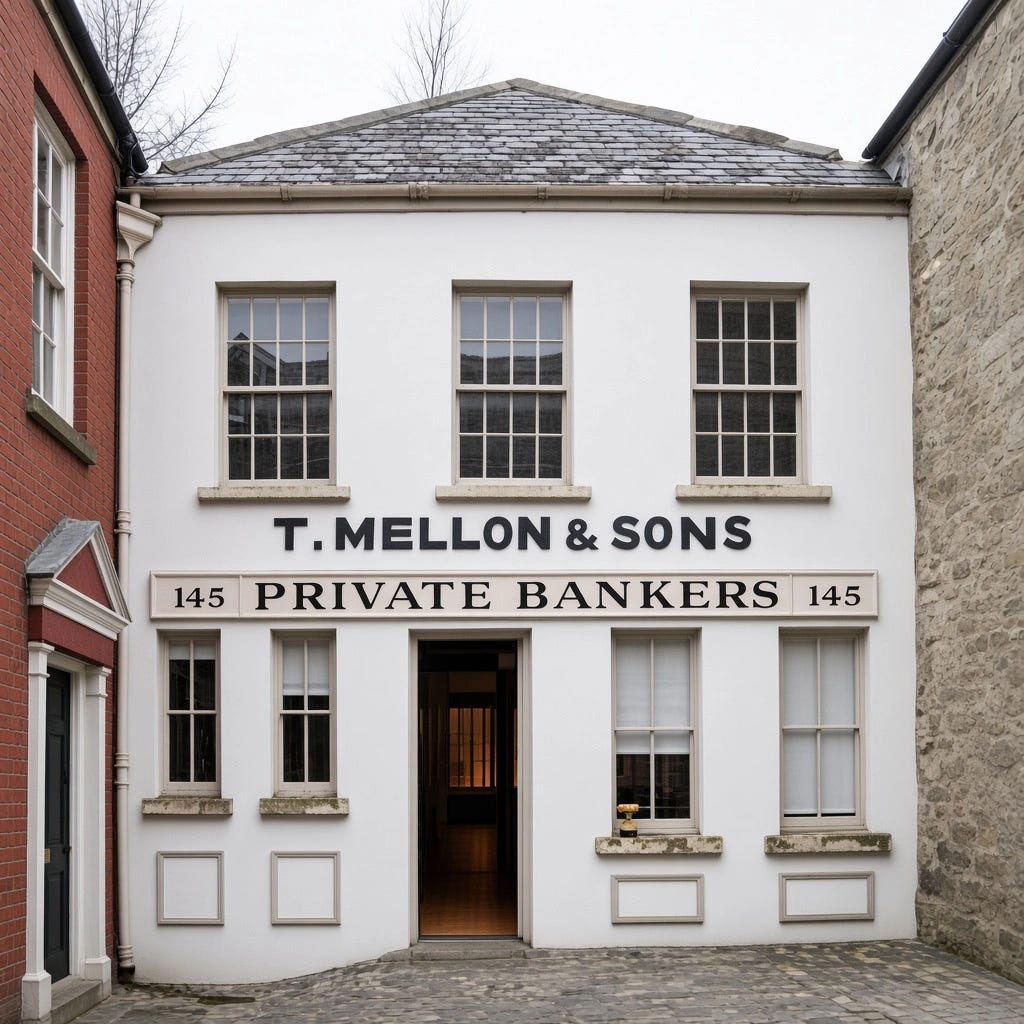
His term on the bench ended in late 1869, and in his own words, he “concluded to open a banking house.” T. Mellon & Sons’ Bank opened on Smithfield Street on January 2, 1870, with two of his sons, Andrew and Richard, working beside him.
A year later, the Judge lent $10,000 to a young coke operator named Henry Clay Frick, whose fuel went on to feed Andrew Carnegie’s steel mills.
When the panic hit, rescue arrived from the family’s youngest banker. Andrew, about 18, left Western University without a degree and joined the bank full-time. Within about a year, deposits climbed back to where they stood before the panic.
Judge Mellon handed the family bank to a 21-year-old.
In 1876, he gave Andrew power of attorney to run it, and over the next 18 years, he signed over everything else, from the bank itself to the last of his assets.
The same year, the Judge introduced his son to Frick, and the two young men became lifelong friends and partners.
Thomas Mellon lived long enough to see what Andrew built, dying on February 3, 1908, his 95th birthday.
With the bank in his hands, Andrew Mellon was ready to do business with John D. Rockefeller, first as a seller and then as a rival.
“In Print”
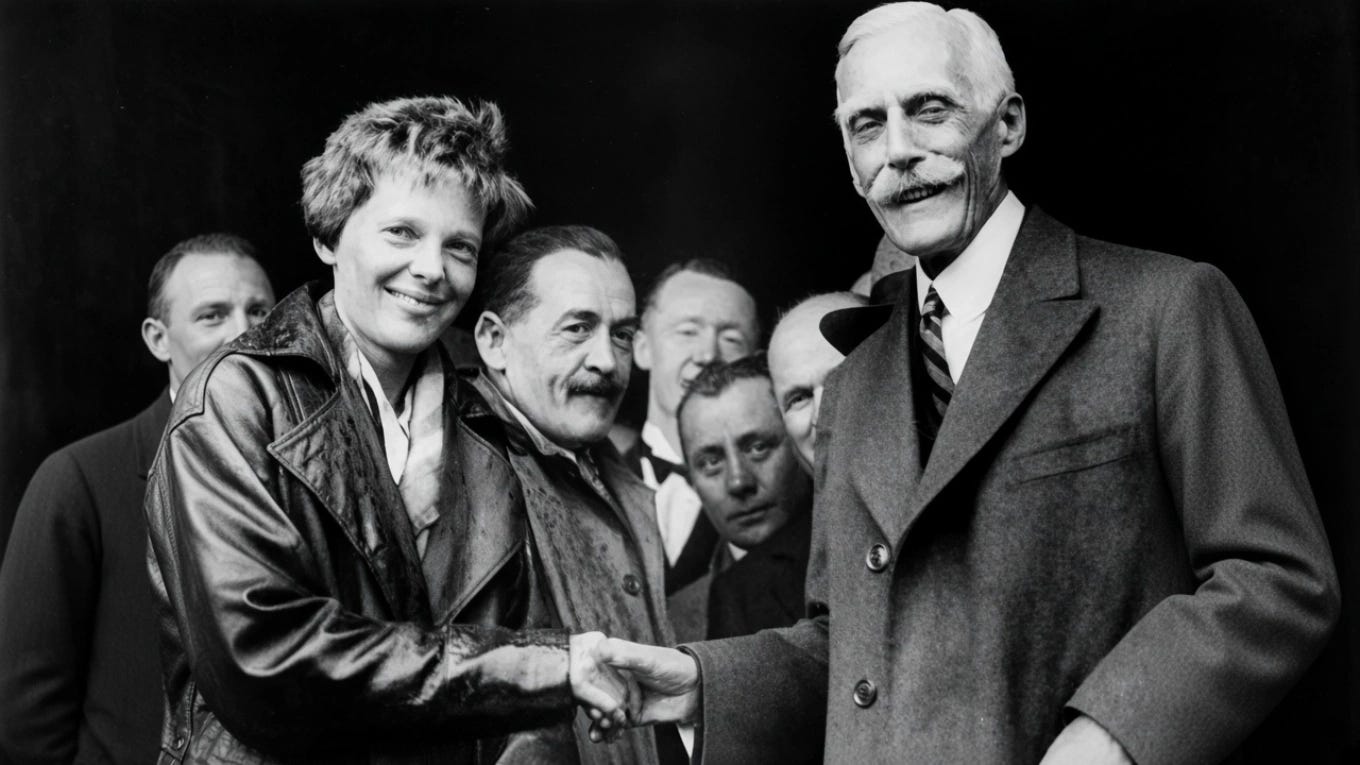
Andrew Mellon turned the family bank into a machine for buying the future.
Forbes later called him a “turn-of-the-century venture capitalist,” and his formula was simple: lend to promising companies, take shares and board seats, install managers he trusted, then wait, sometimes for decades.
Rockefeller bought out the Mellons, and they came back with Gulf Oil.
Oil came first. The family’s oil companies grew until they produced 10 percent of America’s oil exports, and in 1895, the Mellons sold them to Standard Oil.
Within a few years, they were back through the Texas oil boom, and in 1907, they reorganized a Texas company called Guffey into Gulf Oil, which grew into one of the “Seven Sisters” of world oil and a rival to the very company that bought them out.
Aluminum was the investment he loved. In 1889, three men walked into the bank asking for $4,000 for their struggling Pittsburgh Reduction Company, which was built around Charles Martin Hall’s new method for making aluminum.
Andrew gave them more than six times what they asked for, and in 1907, the company took a new name: Alcoa.
While business rarely caught Andrew Mellon off guard, marriage did.
In 1898, at 43, he traveled to Europe with Frick and Frick’s wife and met Nora McMullen, a 19-year-old Englishwoman whose family, like his, had Ulster Scots roots. He courted her on visits to her family at Hertford Castle and married her in 1900.
The historian David Nasaw later wrote that the marriage “was a disaster from the outset.” Nora “was appalled and bewildered by Pittsburgh,” and she resented a husband who gave more of himself to his work than to her. Their daughter, Ailsa, arrived in 1901, but the distance between her parents kept growing.
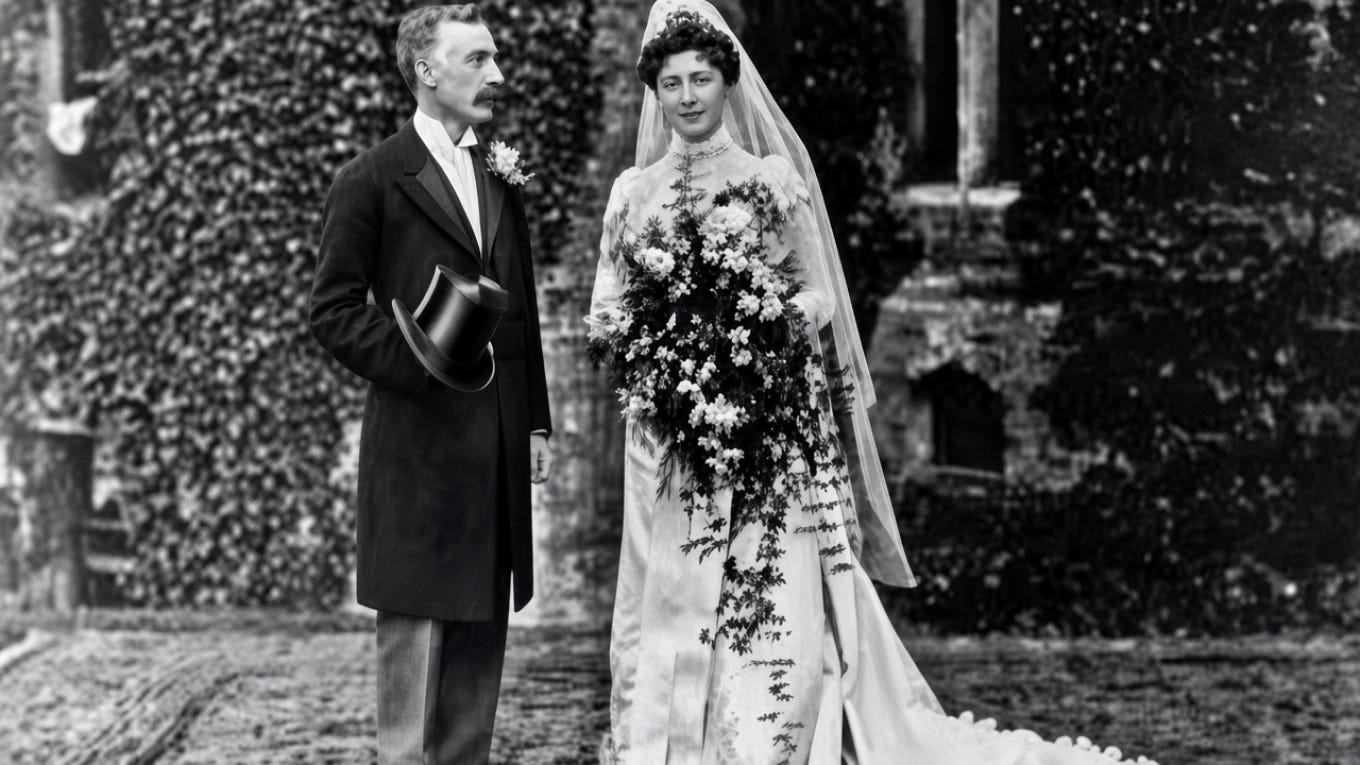
A con man got $20,000 out of Andrew Mellon and nearly took his wife.
His name was Alfred Curphey. In June 1904, Nora threatened to divorce Andrew for him, and Curphey managed to extract $20,000 from Mellon himself.
The couple’s son, Paul, was born in 1907, and soon afterward, the marriage collapsed for good.
Their divorce, final in 1912, dragged Nora’s affair into public view, and Pittsburgh rang with scandal. Andrew noted ruefully that it was “the first time the Mellons have ever been ‘in print.’” He never remarried, and from then on, the family kept its private life out of sight on purpose.
Nine years after the scandal that put the Mellons in print, Andrew accepted the most public job in American finance.
“A Political Prosecution”
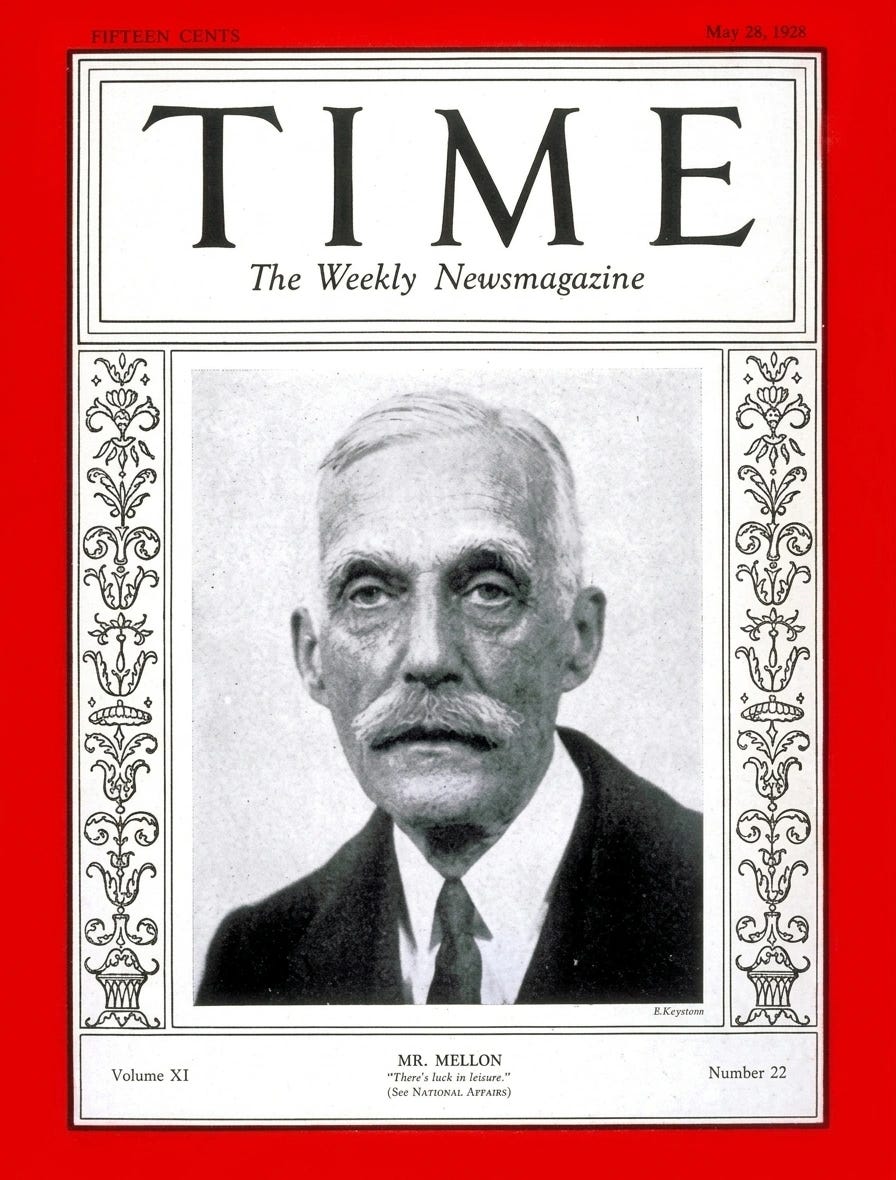
President Harding offered Andrew Mellon the Treasury in 1921, and he accepted with reluctance.
Andrew Mellon took over the U.S. Treasury partly to please his teenage daughter.
His diary named the reason plainly: 19-year-old Ailsa’s social ambitions helped tip the decision. To take the post, he resigned more than 60 company directorships and signed his bank stock over to his brother Dick.
In office, he cut taxes hard. The top income-tax rate fell from wartime highs of roughly 73% to 77% all the way down to 25% by the mid-1920s, and the national debt shrank as revenue rose.
His model was Henry Ford, who made more money by cutting the price of a car and selling far more of them. Mellon called his approach charging “what the traffic will bear.”
Then, in the early 1930s, America’s Treasury Secretary did business with a government the United States refused to recognize.
Stalin’s cash-strapped regime was quietly selling masterpieces out of the Hermitage museum, and Mellon secretly bought 21 of them, including Raphael’s Alba Madonna and Van Eyck’s Annunciation.
The Depression wrecked his reputation along with the economy.
Admirers once called him “the greatest Treasury Secretary since Hamilton,” but now Congressman Wright Patman wanted him impeached, and in 1932, Mellon left Washington to serve as ambassador in London.
Franklin Roosevelt’s government followed him anyway. In 1934, a federal grand jury weighed tax fraud charges and declined to indict him, but the IRS pressed on, taking him through a 14-month civil trial over at least $3 million in back taxes.
One government analyst claimed his transactions “accomplished the fraudulent withdrawal of income taxes from the government,” even though IRS agents reviewing his 1931 return once recommended that he receive a refund of $7,507.74.
In the middle of his tax trial, Andrew Mellon offered America a national gallery.

He met Roosevelt privately in 1936 and offered his paintings, along with the money to build a museum for them.
On December 22, he put the offer in writing. The case ended in 1937 with Mellon cleared of fraud, though the final ruling came after his death that year. “Most historians regard this as a political prosecution,” one tax historian later said.
He never saw the museum open. In 1941, Paul presented the West Building and his father’s 115 paintings to the nation, and 17 of the 21 Hermitage pictures are still on display there.
Paul Mellon now held one of America’s great banking fortunes, and he cared far more about Old Masters and thoroughbreds than about interest rates.
“Not a Functioning Entity”
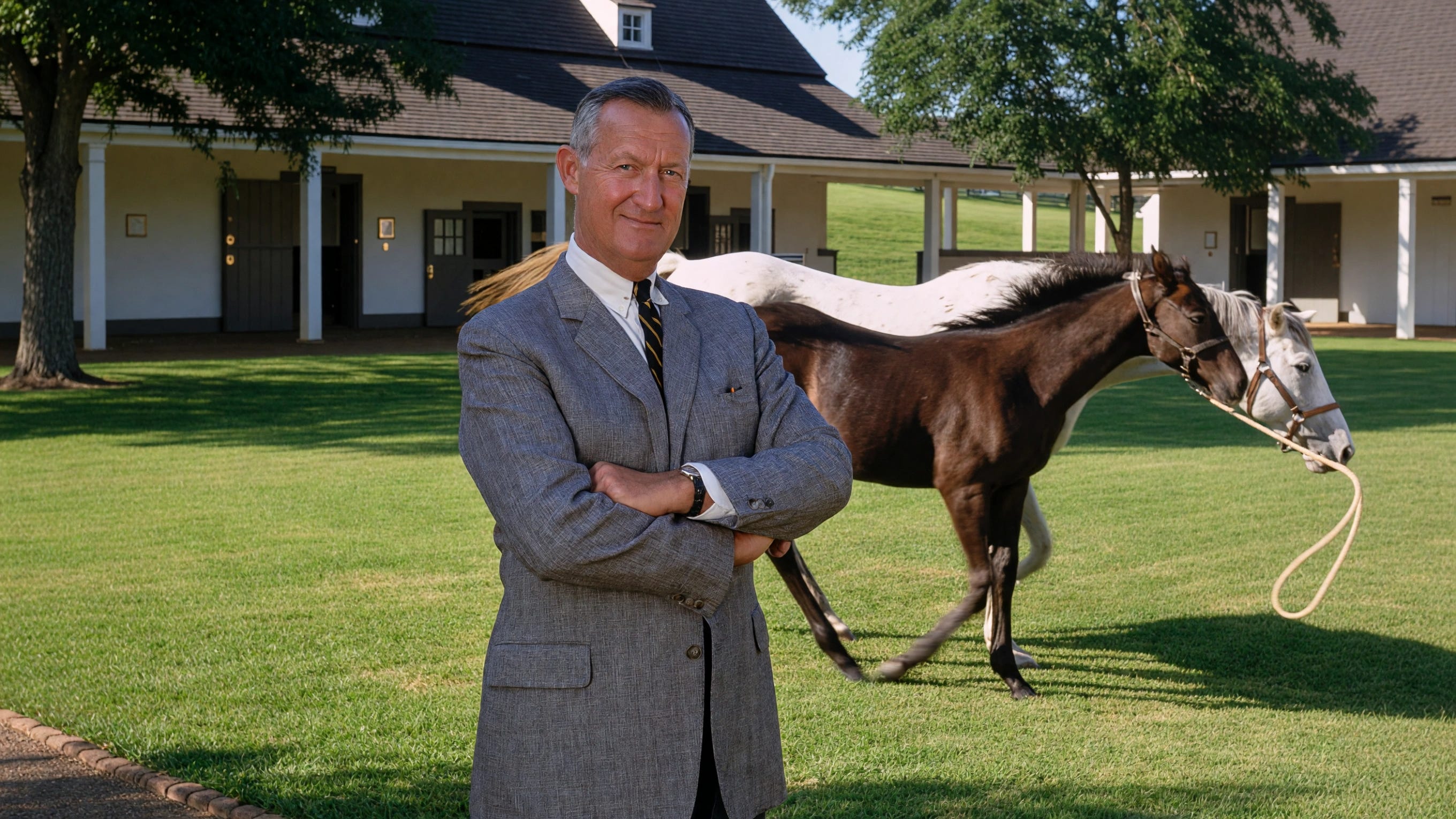
Paul spent much of his inheritance giving it away, and he insisted on doing it quietly.
Paul Mellon refused to put his name on the museum he gave Yale.
He funded the Yale Center for British Art, designed by Louis Kahn, on the condition that it not carry his name.
With his sister, Ailsa, he paid for I.M. Pei’s East Building at the National Gallery, and with Bunny, he gave the museum more than 1,000 works.
Ailsa’s story took a darker turn. She divorced the diplomat David K.E. Bruce, retreated into collecting and was called the wealthiest woman in the United States.
Then, in 1967, her only child, Audrey, and Audrey’s husband, Stephen Currier, vanished in a private plane crash. The wreckage was never found, and they left behind three children, aged 10, 9 and 5.
In Pittsburgh, Richard King Mellon bankrolled the city’s postwar rebuilding alongside its Democratic mayor, David L. Lawrence. The “Pittsburgh Renaissance” attacked the floods, smoke and blight, though its Urban Redevelopment Authority displaced 8,000 residents, businesses and churches along the way.
After he died in 1970, no single Mellon ever ran the family again.
The heirs scattered, and the bank the Judge opened in 1870 left the family’s hands, too, merging with the Bank of New York in 2007.
Tim Mellon was unmasked as the secret $130 million donor for the troops.

Tim Mellon, Paul’s son, built a freight railroad from Maine to Maryland, then turned to politics, giving more than $125 million to MAGA Inc. since 2022.
In October 2025, during the federal shutdown, President Trump announced an anonymous $130 million gift to help pay the troops, and the New York Times identified the donor as Mellon.
Another heir’s life ended as a cautionary tale. Matthew Mellon, an early backer of the cryptocurrency Ripple who married the Jimmy Choo co-founder Tamara Yeardye, struggled publicly with addiction.
In April 2018, he flew to Cancún to enter rehab and died before he checked in.
The fortune itself hasn’t stopped growing, and at least one relative thinks the public estimates fall well short.
John W. Warner IV puts the real figure at “more like $25 billion.”
“These families don’t want the public to know what they’re worth,” he told Vanity Fair.
Tim Mellon has no biological children, and he once dismissed families as “an anachronism.”
“The family unit is not a functioning entity anymore,” he said.
Bunny Mellon lived by four words: “Nothing should be noticed.”
Generations after a farm boy left an Irish cottage, the fortune he started is larger than ever, and his heirs still seem to prefer that nobody notices.
I am a docent at the Virginia Museum of Fine Arts. Our Impressionist and sporting arts collections were donated by Paul Mellon. Bunny donated her collection of Schlumberger jewelry and decorative arts. All generous gifts which have greatly enhanced the museum’s permanent collection.
And do not forget Thornton Mellon and his clothing empire.